

7 Truths About What Direct Trade Coffee Sourcing Really Means
Last Updated: October 26, 2026
Quick Summary
Direct trade coffee is green coffee bought through a direct relationship between a roaster and a producer or cooperative, usually with fewer intermediaries and a stated premium above commodity pricing. No U.S. law or certifying body defines the term, so anyone can print it on a bag. Direct trade shortens the supply chain and makes it legible, but it rarely eliminates intermediaries entirely.
- A typical chain runs producer, cooperative, exporter, importer, roaster, retailer, and direct trade rarely removes all of them.
- Fair Trade is a third-party certification with published standards and audits; direct trade is an unstandardized business arrangement.
- A credible price disclosure states farmgate price per pound of green coffee, the quality premium, a benchmark, and payment timing.
- Producers who commit most of a harvest to one roaster carry concentration risk if that roaster cuts orders.
- Direct trade cannot scale to every bag on every shelf, and no agency audits a roaster's claim.
Table of Contents
- "Direct Trade" Has No Legal Definition, and That Changes Everything
- How Direct Trade Coffee Works From Farm to Roastery
- Direct Trade vs Fair Trade Coffee: Two Different Tools
- Direct Trade Coffee Benefits, and Who Actually Collects Them
- Coffee Sourcing Transparency: How to Verify Price and Origin Claims
- The Uncomfortable Limits of Direct Trade Sourcing
- Taste the Difference in a Bag With a Named Farm
- Frequently Asked Questions
"Direct Trade" Has No Legal Definition, and That Changes Everything
At Oak & Origin Coffee Co., we buy small-batch green coffee from named farms and cooperatives, and we think the vagueness of the term is a feature and a hazard at once.
Below, we'll show you exactly how the supply chain actually works, how direct trade differs from Fair Trade, and how to verify a price claim before you spend money on a bag.
How Direct Trade Coffee Works From Farm to Roastery
The mechanics are simpler than the marketing suggests, but the cost structure is more complicated than most guides admit. A roaster identifies a producer or cooperative, agrees on a lot and a price, commits in advance of harvest, and arranges shipping.
Who Actually Sits in the Supply Chain
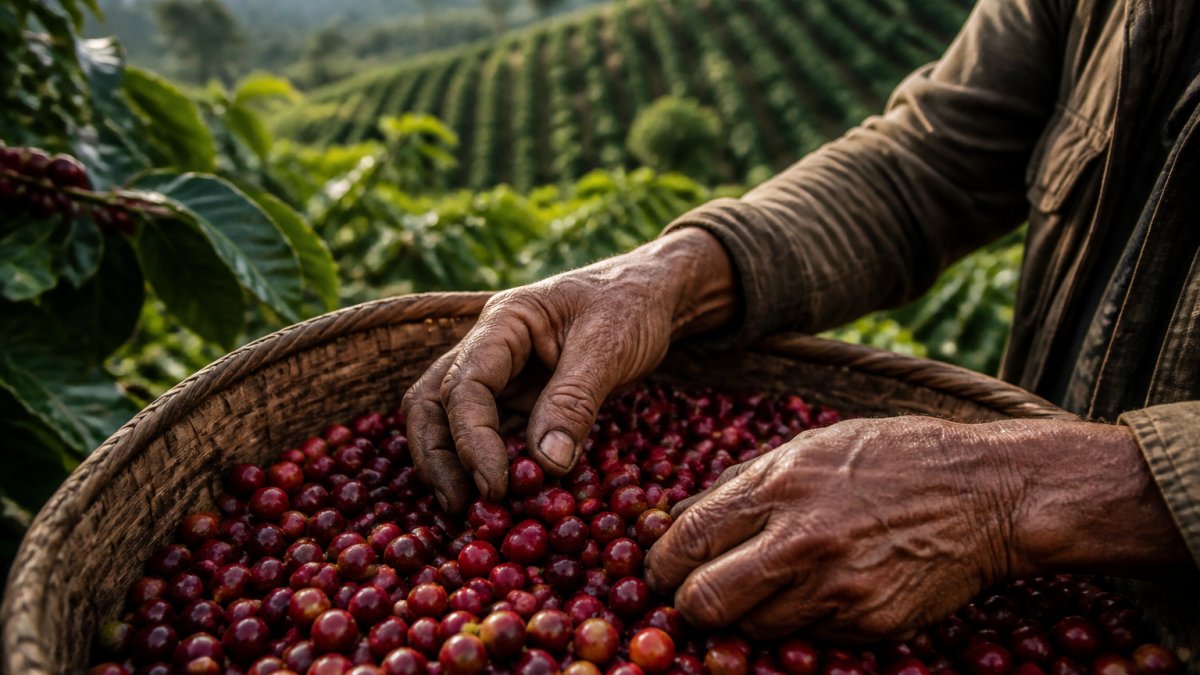
A typical chain runs producer, cooperative, exporter, importer, roaster, retailer. Direct trade shortens that chain but rarely eliminates it. Most roasters still need an importer to handle customs, warehousing, and freight, because a small roastery cannot absorb a container of green coffee. A roaster buying a single 60-kilogram bag still depends on someone who consolidated that bag into a shipment.
The roles that matter, and what each one costs:
- Producer: grows and harvests the coffee, often on a small plot. Receives the farmgate price, which is the number transparency claims should disclose.
- Cooperative: aggregates lots from many smallholders, handles processing and negotiation, and often provides the only route to market for producers with a few bags each. Cooperatives typically retain a per-pound fee for aggregation and administration.
- Exporter: moves green coffee out of the origin country, handles export documentation, and coordinates with mills and freight forwarders. Export costs include milling, bagging, inland transport, and port fees.
Why "Direct" Rarely Means Zero Intermediaries
A direct relationship usually means the roaster knows the producer and negotiates the price, not that the coffee travels without help. The exporter and importer are still in the chain, and their costs are real.
The practical distinction is between intermediaries the roaster has chosen and can name, and intermediaries that sit between the roaster and the producer as anonymous layers.
Contracts, Advance Commitments, and Logistics
What separates direct trade from a spot purchase is the advance commitment. A roaster agrees to buy a specific lot before it is harvested, which gives the producer certainty and often a premium above the market price.
A workable contract covers more than price.
Watch out: an "advance commitment" that is verbal or unsigned is worth nothing when the harvest fails or prices swing.
Where the Costs Land
Every step in the chain adds cost, and those costs determine whether a direct trade bag can actually pay the producer more.
That is why direct trade tends to concentrate among roasters with enough volume to justify the logistics, and why the model does not scale to every bag on every shelf.
Here is who sits in a typical supply chain and what each role does and costs.
| Role | What they do | Cost or fee noted |
|---|---|---|
| Producer | Grows and harvests coffee, often on a small plot | Receives the farmgate price |
| Cooperative | Aggregates lots, handles processing and negotiation | Retains a per-pound fee |
| Exporter | Moves coffee out of origin, handles export documentation | Milling, bagging, inland transport, port fees |
| Importer | Clears customs, stores, delivers to roastery | Freight, duties, warehousing, financing; margin per pound |
| Roaster | Buys the lot, roasts to order, sells the bag | Roasting loss, packaging, retail margin |
Direct Trade vs Fair Trade Coffee: Two Different Tools
Fair Trade is a third-party certification with published standards, audits, and a licensing fee. Direct trade is an unstandardized business arrangement. That is the whole difference in one line.
Fair Trade certification is administered by certifying organizations that inspect producers and verify compliance with social and environmental criteria; the mark on a bag means an independent body checked something.
Neither model is automatically better. Certification is verifiable by a stranger; a direct relationship is verifiable only if the roaster chooses to be transparent.
Direct Trade Coffee Benefits, and Who Actually Collects Them
The benefits are real but unevenly distributed. Roasters get traceability and story. Consumers get fresher, more distinctive cups. Producers get the most variable outcome of the three.
What Producers Gain, and What They Risk
On the upside, a direct relationship can mean a higher purchase price, a predictable buyer, and technical help with processing.
The risks are less discussed. A producer who commits most of a harvest to one roaster carries concentration risk.
A common mistake among well-meaning buyers is assuming a direct relationship automatically improves labor conditions or environmental practices. It does not, unless the contract says so and someone checks.
Coffee Sourcing Transparency: How to Verify Price and Origin Claims
Verification is possible, and it takes about ten minutes. The problem is that most roasters publish a story, not a price. A transparent claim should let a stranger reconstruct the transaction: who grew the coffee, who moved it, what was paid at the farmgate, and how that number compares to a benchmark. If any of those pieces are missing, the claim is marketing, not transparency.
What a Transparent Price Disclosure Should Include
A credible price disclosure has four components. Ask for all four, and treat a partial answer as a partial claim.
- Farmgate price, in dollars per pound of green coffee. Not per finished bag, not per roasted pound, not a percentage. Green coffee weight is the only unit that lets you compare across roasters.
- Quality premium. The amount paid above the local benchmark or the commodity market price, stated separately from the base price. A single blended number hides whether the premium is real.
- Benchmark comparison. The relevant reference point: the local farmgate benchmark in the origin country, the commodity market price for the relevant grade, or both. A premium means nothing without the baseline it sits on.
The Four Questions That Separate Claims From Evidence
- What is the name of the farm or cooperative, and the region?
- What was the farmgate price per pound of green coffee, and what benchmark does that compare to?
- Who is the importer or exporter, and can you name them?
- When was the last visit to the origin, and who went?
Vague answers ("we work with farmers who share our values") are the tell. Specific answers include names, dates, and numbers. The same skepticism applies to tea, and the skills for spotting ethical sourcing claims transfer directly.
Why "Farmgate Price" Alone Is Not Enough
A farmgate price quoted without units or a comparison baseline tells you nothing. Ten dollars per pound sounds impressive until you learn the local benchmark was nine.
The comparison that matters is not "did the roaster pay more than the commodity market" in the abstract. It is whether the producer received a meaningfully better outcome than their realistic alternatives, on terms that fit their cash flow.
What Traceability Should Actually Prove
Traceability is not a QR code that opens a farm profile. It is the ability to follow a specific lot from a specific producer through processing, export, import, and roasting without mixing.
The strongest disclosures combine a named producer, a stated farmgate price with a benchmark, named supply-chain partners, and a visit date. That combination is rare, which is why it is worth asking for.
The Uncomfortable Limits of Direct Trade Sourcing
Direct trade cannot scale to every bag on every shelf, and pretending otherwise is dishonest.
The model also has a cost problem. Direct relationships require travel, sample shipping, small-lot freight, and administrative time.
There is also no enforcement mechanism. If a roaster misrepresents a relationship, no agency will audit the claim. Consumer pressure and press scrutiny are the only backstops, which is why published prices and named farms matter so much.
Taste the Difference in a Bag With a Named Farm
The clearest proof of a sourcing claim is a bag that names the people who grew the coffee. For help choosing between them, see our guide to the best tasting single origin coffee beans.
Our Bali Blue Moon comes from smallholder farmers in the Kintamani highlands, hand-picked and wet-hulled, with dark chocolate and molasses in the cup. The Peru lot comes from the Norandino cooperative across Piura and Amazonas, medium roasted with salted caramel and citrus.


Frequently Asked Questions
Does direct trade guarantee farmers a higher price?
No. There is no certification body setting a floor, so the price depends entirely on the individual roaster's agreement. Some roasters publish farmgate prices well above commodity rates; others use the label loosely and pay near market. Ask a roaster what they paid per pound at origin and whether they can name the farm or cooperative. If they cannot answer either question, treat the direct trade coffee claim as marketing rather than a verified commitment.
How can you tell whether a coffee is genuinely direct trade?
Look for specifics a marketer would not bother to invent: a named farm or cooperative, a region and altitude, a harvest year, and a stated relationship length. Then check whether the roaster publishes purchase prices or a sourcing report. A bag that says only "ethically sourced" tells you nothing verifiable. Coffee sourcing transparency means you can trace the lot back to a producer and see roughly what was paid for it.
How is direct trade coffee different from fair trade coffee?
Fair Trade is a third-party certification with published standards, inspection, and a minimum price plus a social premium paid to cooperatives. Direct trade is an unregulated term describing a roaster buying from producers with fewer intermediaries, usually with quality incentives built in. Fair Trade gives you an auditable baseline; direct trade can pay more but offers no guarantee unless the roaster volunteers evidence.
Does direct trade coffee mean the roaster buys directly from the farmer?
Usually not literally. Most roasters still rely on an exporter at origin and an importer to handle milling, customs, and freight, because navigating those steps alone is impractical at small volumes. What distinguishes direct trade is the roaster negotiating with the producer and often visiting the farm, not the absence of every intermediary. Ask which roles sit between the farm and the roastery and who pays for each.
The gap between a sourcing claim and a sourcing practice is where most coffee brands live. We would rather close it. Oak & Origin Coffee Co. roasts small batches to order, names the farm or cooperative on every bag, and sources beans we can trace to a specific lot and harvest. Get started with Oak & Origin Coffee Co. and taste a cup you can actually trace back to the people who grew it.
