

How to Verify Coffee Supply Chain Transparency
Last Updated: November 4, 2026
Quick Summary
To verify coffee supply chain transparency, request purchase records, lot identifiers, origin documentation and audit reports from the roaster, then grade each label claim as supported, partially supported or unaddressed. Aim for grade B or better, where a named cooperative plus purchase records proves strong origin with partial lot detail.
- A typical coffee supply chain passes through farmer, cooperative, exporter, importer and roaster, and each handoff can blur lot identity.
- A certification mark confirms a standard was checked, not that a specific bag was traced from a specific farm.
- Ask whether a certification is identity preserved or mass balance, since mass balance allows commingling.
- A transparency report should state the farmgate price and any premium separately from the base price.
- A roaster that explains a record gap or conflict is more credible than one claiming a flawless chain.
Table of Contents
- Why Coffee Supply Chain Transparency Is Hard to Verify
- Coffee Supply Chain Traceability: What It Actually Means
- The Coffee Traceability Documents to Request From a Roaster
- Coffee Origin Verification: Matching Claims to Records
- An Ethical Coffee Sourcing Checklist for Buyers
- Where Certifications and Digital Tools Stop Working
- Reading Farmer Payments and Pricing in a Transparency Report
- Start With a Roaster That Publishes Its Sourcing Records
- Frequently Asked Questions
Why Coffee Supply Chain Transparency Is Hard to Verify
Verifying coffee supply chain transparency means checking that a roaster's claims about where beans came from, who grew them, and how they were bought hold up against actual records.
A bag can say "ethically sourced" and mean almost nothing, or name a country without naming a farm. That gap between marketing claim and verifiable record is where most coffee supply chain questions live.
The Intermediaries Between Farm and Roaster
Every handoff in the coffee supply chain adds distance between the farmer and your cup. A typical path runs:
- Farmer or smallholder grows and harvests the cherries
- Cooperative or collector gathers lots from many farms
- Exporter mills, sorts, and ships from origin
Each step keeps its own paperwork and can blur the lot identity. When a roaster says "we buy direct," ask which of these steps still happened behind the scenes. For a closer look at what that claim really involves, see what direct trade coffee sourcing really means.
Why a Single Label Cannot Prove a Chain
A certification mark confirms that a set of standards was checked at some point. It does not follow a single bag from a single farm through every handoff. One logo is evidence of a program, not proof of a specific chain of custody.
Watch out: treating a certification seal as a complete answer is the most common buyer mistake. It answers "was this audited?" but not "can you show me the lot records?"
Coffee Supply Chain Traceability: What It Actually Means
Coffee supply chain traceability is the ability to follow a specific lot of beans backward from the roasted bag to the farm or cooperative that grew it, using records at each step.
Three things separate real traceability from marketing language:
- Lot identification that stays consistent from purchase to roast
- Sourcing records that name the producer, region, and harvest
- Chain of custody showing who held the coffee at each stage
If a roaster can name the cooperative and the harvest window but not the lot, you have partial traceability. That is common and not automatically bad. It just means you are trusting a summary rather than checking a record.
The Coffee Traceability Documents to Request From a Roaster
Ask for four documents. A transparent roaster will have most of them ready; a vague one will deflect. The value comes from knowing what each document should contain and how to move from a label to a validated lot claim.
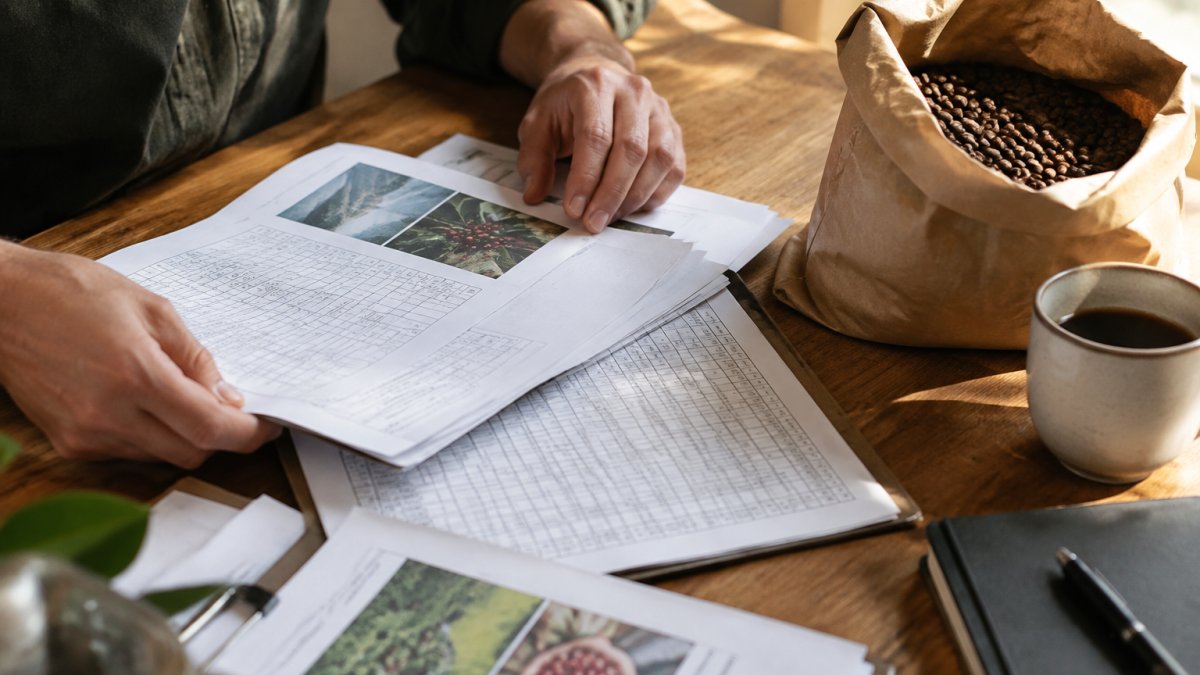
- Purchase records or contracts naming the producer, cooperative, or importer
- Lot or shipment identifiers that match what went into the roast
- Origin documentation such as export or import paperwork
- Audit or certification reports, if any program applies
You will not always get all four. What matters is how the roaster responds. A clear "here is what we have and here is what we do not" builds trust.
A Repeatable Verification Workflow
Use the same sequence every time so you can compare roasters on equal terms.
- Start with the label. Note the country, region, farm or cooperative name, process, harvest, and any certification, exactly what the bag claims.
- Request the purchase record. Ask for the document naming the producer or importer and the volume purchased, and check it matches the label.
- Request the lot identifier. Ask which lot or shipment identifier corresponds to your coffee and whether it appears on the purchase and roast records.
- Request origin documentation. Ask for export or import paperwork naming the same country and region as the label.
- Request audit or certification reports. Ask which program applies, which custody model it uses, and what share of volume is covered.
- Compare claims to records. Mark each label claim as supported, partially supported, or unaddressed.
- Ask about gaps. Where a claim is unsupported, ask the roaster to explain, the explanation is often more informative than the document.
What Each Document Should Contain
A purchase record is useful only if it names the producer or cooperative, the volume, and a date or harvest window.
A lot identifier is useful only if it connects the green coffee purchase to the roasted coffee you are buying.
Origin documentation should match the label on country and region. Mismatches are not always fraud, but they require an explanation.
An audit report should name the standard, the auditor, the date, and the scope.
How to Grade the Evidence You Receive
Not all evidence carries the same weight. Use this simple grading scale:
| Grade | What You Have | What It Proves |
|---|---|---|
| A | Named farm plus lot records matching the roast | Full chain of custody |
| B | Named cooperative plus purchase records | Strong origin, partial lot detail |
| C | Country or region plus certification only | Program membership, not a specific chain |
| D | Marketing language, no records | Nothing verifiable |
Aim for B or better. Grade C is where most supermarket coffee sits. Grade D is where you should ask harder questions.
When the Documents Do Not Arrive
A roaster may decline to share records for legitimate reasons, such as supplier confidentiality. The response itself is data: one that explains the limit and offers what it can share is more credible than one that promises records and never sends them. If you are buying at volume for a café or procurement team, put the request in writing and ask for a response timeline before you commit.
Coffee Origin Verification: Matching Claims to Records
Origin verification is the step where you compare what the bag says to what the paperwork shows. If you want to understand why that distinction matters before you start checking, this explainer on what makes single origin coffee different covers how origin is defined and why it changes flavor.
Here is how to match claims to records:
- Country claim: does the export paperwork name the same country?
- Region claim: does the purchase record name the same region or cooperative?
- Farm claim: is there a named producer, or only a general area?
Mismatches are not always fraud. Records get summarized and translated. But a claim that never appears in any record is a claim you cannot verify.
An Ethical Coffee Sourcing Checklist for Buyers
Use this checklist before you commit to a roaster. It turns a vague gut feeling into a repeatable process.
- The roaster names the farm, cooperative, or importer
- The bag lists a region specific enough to check
- The roaster responds to a sourcing question within a few days
If a roaster clears six of eight, you are dealing with a serious operation. If it clears two, keep looking. When you are ready to put the checklist to use, you can contact the roaster directly with your sourcing questions.
Where Certifications and Digital Tools Stop Working
Certifications verify programs, not individual bags. A fair trade or organic mark tells you a standard was applied somewhere in the chain, not the farmer's name or the exact lot. The mechanism behind that gap is chain of custody, and understanding it is the difference between reading a logo and reading a claim.
Chain of Custody vs. Mass Balance
Traceability claims generally follow one of two models, and the model determines what the claim actually guarantees.
- Identity preserved (chain of custody): the certified or verified coffee is physically segregated from conventional coffee at every handoff. A lot number follows the beans from farm to roaster. This is the strongest model and the hardest to maintain, because every intermediary must keep the lot separate.
- Mass balance: certified and conventional coffee are commingled in storage or processing, and the operator tracks volumes on paper so that the volume sold as certified does not exceed the volume purchased as certified. The coffee in your bag may not be the coffee that was certified; the accounting balances across the pool.
Mass balance is common in commodity-scale supply chains because physical segregation is expensive. It is not fraud, but it is a weaker guarantee.
Watch out: a roaster that cannot say whether its certification is identity preserved or mass balance is a roaster that has not asked its importer the same question you are asking.
What Audit Coverage Actually Tells You
A certification confirms that an auditor checked a sample of operations against a standard, not that every farm, lot, or shipment was audited.
Ask what percentage of sourcing volume is covered, how often audits occur, and whether audits are announced or unannounced. A program that audits a small share of volume gives you a small share of assurance. A program with broad coverage and unannounced audits gives you more.
Where Digital Traceability Tools Inherit the Same Weakness
Blockchain and digital traceability platforms can prove that a record was not altered after it was entered (Blockchain | NIST). They cannot prove the record was accurate when first written.
Digital tools also inherit the chain-of-custody question. A platform can record that a lot was split, blended, or commingled, but it cannot force physical segregation. The tool improves record integrity; it does not change the underlying custody model.
When Records Conflict or Cannot Be Disclosed
Verification sometimes fails not because a roaster is hiding something but because the records do not line up. Common patterns include:
- Supplier confidentiality: an importer or exporter will not disclose farm identities to protect its sourcing relationships. In that case, ask whether the roaster has seen the records even if it cannot share them, and whether it will confirm the custody model.
- Conflicting records: the purchase record names one cooperative while the export paperwork names another. This often reflects aggregation, translation, or a change of intermediary rather than fraud. Ask the roaster to explain the discrepancy rather than assuming the worst.
- Gaps in digital systems: a platform may have missing entries where a handoff was recorded offline. A gap is not proof of a problem, but it is a limit on what the record can prove.
A roaster that explains a gap or a conflict is more credible than one that claims a flawless chain. Perfect records are rare; honest explanations are the better signal.
Reading Farmer Payments and Pricing in a Transparency Report
A transparency report should tell you how much of the price reached the farm. Look for the farmgate price, which is what the farmer was paid at origin, and any premium paid above the market rate.
Read the report with three questions:
- Is the payment figure per pound or per lot?
- Is the premium stated separately from the base price?
- Does the report cover all sourcing volume, or only a showcase program?
A report that gives a range and explains the method is more credible than a single impressive number. A report with no figures at all is a story, not a disclosure.
Start With a Roaster That Publishes Its Sourcing Records
The fastest way to verify coffee supply chain transparency is to buy from a roaster that already publishes what you would otherwise have to chase. At Oak & Origin Coffee Co., we build our small-batch roasting around named origins, so the record starts with the coffee itself.
Our Bali Blue Moon comes from smallholder farmers in the Kintamani highlands, and our Peru lot is grown by the Norandino cooperative in Piura and Amazonas. If you want the story behind how we source, our founder's story explains why transparency sits at the center of what we do.
Frequently Asked Questions
How can you verify where coffee beans come from?
Ask the roaster for the country of origin, the region, the producer or cooperative name, and the lot identification number. Then check that those details match what appears on the bag and in any published sourcing records. A credible coffee supply chain disclosure names a specific farm or cooperative rather than only a country. If a roaster cannot provide a lot or producer name, treat the origin claim as unverified and ask what level of traceability they can confirm.
What documents can verify a coffee's origin and traceability?
Request the purchase contract or invoice from the importer, the exporter's shipping documents, the cooperative's delivery records, and any third-party audit reports. Coffee traceability documents should connect a specific lot to a specific producer group. Ask whether the roaster keeps chain-of-custody records for each lot and whether those records are available on request. Documentation that stops at the importer level still leaves the farm end of the chain unconfirmed.
Does a single-origin label prove coffee is traceable to a farm?
No. Single origin typically means the coffee comes from one country or region, not that it traces to one farm. Coffee supply chain traceability requires lot-level records linking the bag to a producer or cooperative. Ask the roaster how many farms contributed to the lot and whether they can name them. A blend from a named cooperative with published delivery records can be more traceable than a single-origin bag with no producer information.
What certifications help verify sustainable coffee sourcing?
Third-party certifications such as Fair Trade, Rainforest Alliance, and organic programs involve independent audits against labor, environmental, or pricing standards. They add a layer of verification, but each covers different criteria and audit coverage varies by volume. Use certifications as one input in an ethical coffee sourcing checklist, not as a substitute for asking about farmgate price, chain of custody, and which producers supplied the lot. Pair the certificate with the roaster's own sourcing records.
The real test is not whether a roaster has a nice sourcing page, but whether it answers a direct question with a document. Start there. Browse our single origin coffees, ask us anything about where a lot came from, and taste the difference that a traceable cup makes. Get started with Oak & Origin Coffee Co. and brew a cup you can actually trace.
