

How to Choose Coffee for Daily Focus: A Complete Guide
Table of Contents
- Why Coffee for Focus Starts With Your Physiology
- How to Choose Coffee Beans for Steady Mental Clarity
- The Best Coffee for Focus: Matching Roast and Blend to Your Workday
- Coffee Caffeine Content: What Actually Reaches Your Cup
- Coffee Timing and Focus: Aligning Caffeine With Your Circadian Rhythm
- Avoiding the Caffeine Crash and Jitters
- Build Your Focus Ritual With Oak & Origin Coffee Co.
- Frequently Asked Questions
Last Updated: November 17, 2026
Why Coffee for Focus Starts With Your Physiology
Learning how to choose coffee for daily focus begins with one fact: the same bean can sharpen one person and leave another jittery. Caffeine blocks adenosine receptors, the docking points where sleepiness builds up during the day. At Oak & Origin Coffee Co., we think of the daily cup as a tool you calibrate, not a habit you repeat blindly. This guide walks through roast choice, brew strength, timing, and the crash that follows a poorly matched cup. Below, we show you exactly how to read your own response and pick a coffee that supports steady mental clarity.
Caffeine sensitivity is the practical starting point. People respond to the same cup in different ways.
How to Choose Coffee Beans for Steady Mental Clarity
Choosing beans comes down to three decisions: roast level, freshness, and origin. Each one changes how the cup feels in your body, not just how it tastes.
- Roast profile: darker roasts tend to taste bolder and smoother, while lighter roasts keep more of the bean's natural brightness and fruit notes.
- Freshness: look for a roast date, not just a best-by date. Beans roasted to order carry more aroma and complexity.
A common mistake is buying pre-ground coffee in bulk and storing it for weeks. Ground coffee loses aroma fast, so whole beans you grind just before brewing give you a fresher, more consistent cup.
Roast Profile, Freshness, and What the Label Tells You
The label answers most of your questions if you know where to look. A roast profile describes how long and how dark the beans were roasted, and it drives flavor notes and body. Arabica vs robusta matters too: arabica beans tend to taste smoother and more aromatic, while robusta carries more caffeine and a harsher edge. Specialty-grade beans are graded for quality and traceability, so the label usually names the bean origin and the processing method.
Read the roast date first. Then check for a named origin and a processing method.
The Best Coffee for Focus: Matching Roast and Blend to Your Workday
The best coffee for focus is the one that matches your work rhythm. Match the blend to the shape of your day rather than chasing the strongest option.
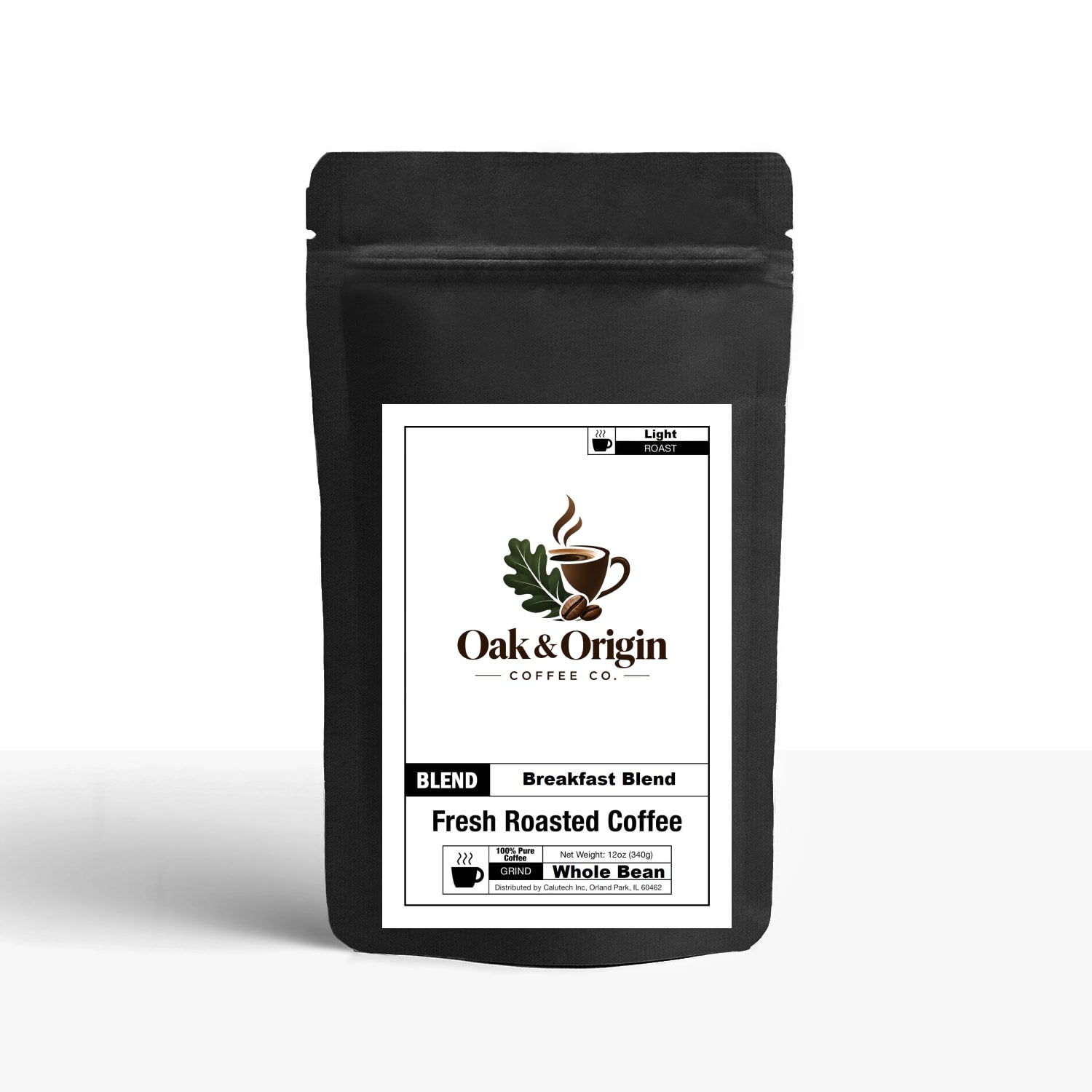
- Early, long workday: a smooth, lightly bright breakfast blend eases you in without a spike. Our Breakfast Blend is a lightly roasted South American blend with walnut, mild apple, raisin, and toffee notes, built for a steady first cup.
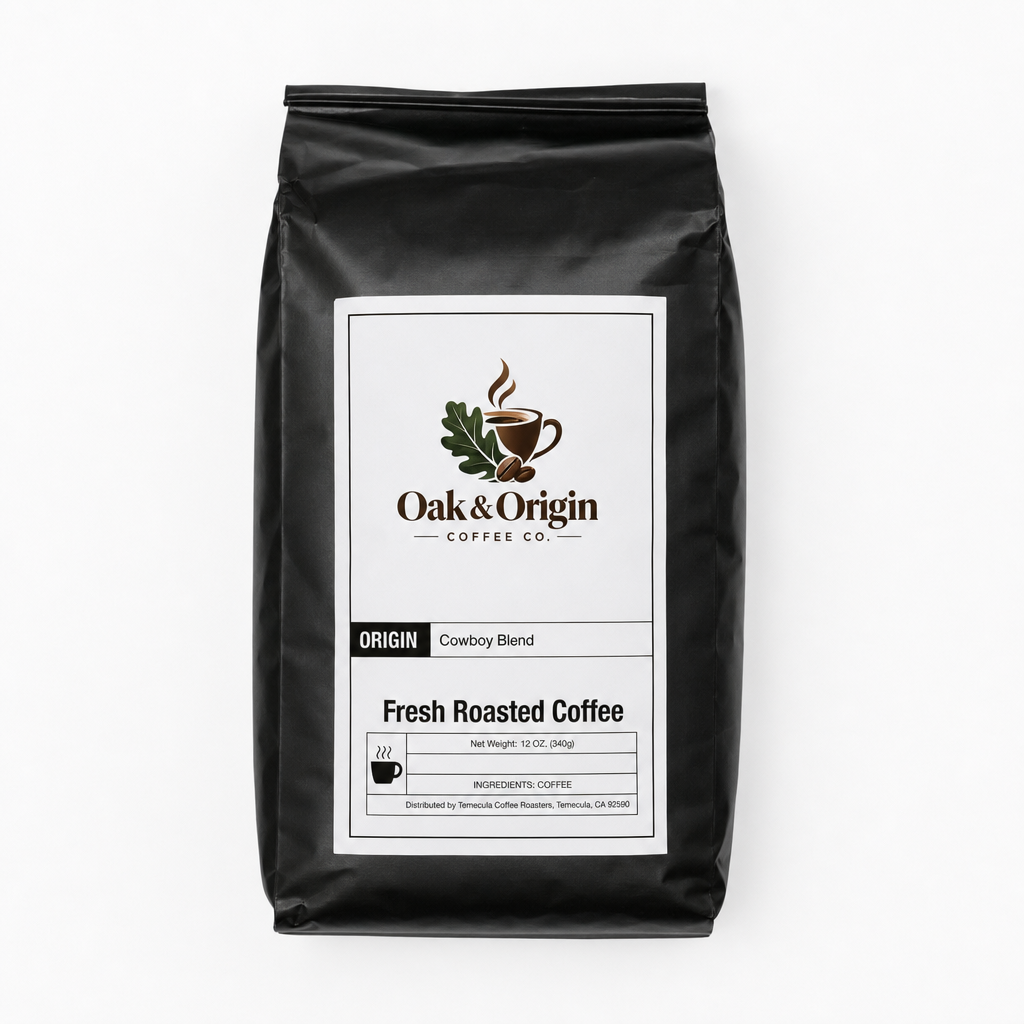
- Bold mornings and deep work: a darker, fuller cup suits people who want a hearty start. Our Cowboy Blend layers cocoa, caramel, and vanilla over a medium-full body with low, smooth acidity.
- Desk-bound creative sessions: a lighter, aromatic cup keeps the ritual light. Our guide to the best coffee beans for home office focus and flavor breaks down specific picks for a workday at home.
Coffee Caffeine Content: What Actually Reaches Your Cup
Caffeine content depends less on the bean than on how you brew it, and on how your body handles what you brew. Two people can drink the same cup and get very different focus outcomes. Understanding both halves of that equation is what separates a calibrated cup from a gamble.
The brewing half. A brew ratio that uses more coffee per unit of water raises the dose, and longer contact time pulls more caffeine into the cup. Extraction yield is the measure of how much soluble material the water pulls from the grounds, and it shapes both strength and flavor.
- A finer grind and longer steep generally extract more caffeine.
- A coarser grind and faster brew leave more behind in the grounds.
- Water chemistry matters more than most guides admit: mineral content affects how efficiently flavor and caffeine dissolve. Water that is too soft under-extracts and tastes flat; water that is too hard can mute brightness and leave scale behind. A simple filtered tap water is usually a better starting point than distilled water, which lacks the minerals extraction needs.
As a rough reference point, an 8-ounce cup of drip coffee commonly lands somewhere in the 95-165 mg caffeine range depending on ratio and roast, while a single shot of espresso is typically around 60-75 mg. These are ranges, not guarantees, your grind, dose, and water will move the number. If you want control over what lands in your mug, our step-by-step pour over guide shows how grind, ratio, and timing change the final cup. Tannins and acidity round out the picture; they shape how the coffee tastes and how it sits with you, which is why a well-extracted cup feels smoother than a bitter, over-extracted one.
The physiology half, the part most guides skip. How long a cup keeps working depends on your caffeine half-life, the time it takes your body to clear half of a dose. If you are a slow metabolizer, a mid-afternoon cup can still be circulating at bedtime; if you are fast, the same cup may fade before lunch and tempt you into a second one that stacks the dose.
Watch out: stacking a second cup because the first "wore off" can double your total dose without doubling your focus, especially for slow metabolizers, where the first cup is still active in the background.
Caffeine in the cup depends on how you brew it, and these reference points show the range.
| Item | Value | Note |
|---|---|---|
| 8-ounce cup of drip coffee | 95-165 mg caffeine | Varies with ratio and roast |
| Single shot of espresso | Around 60-75 mg | Typical range, not a guarantee |
| Finer grind and longer steep | More caffeine extracted | Leaves less behind in grounds |
| Coarser grind and faster brew | Less caffeine extracted | More stays in the grounds |
| Too-soft water | Under-extracts, tastes flat | Lacks minerals extraction needs |
| Too-hard water | Can mute brightness | May leave scale behind |
| Filtered tap water | Better starting point | Preferred over distilled water |
Coffee Timing and Focus: Aligning Caffeine With Your Circadian Rhythm

Timing decides whether caffeine helps or hinders. Your circadian rhythm governs natural alertness, and caffeine works best when it lands just before your energy naturally dips. Many people find a cup mid-morning and another in the early afternoon supports alertness without disturbing sleep, while a late cup can keep them wired at bedtime.
Watch the clock. The coffee timing and focus relationship is really a sleep relationship in disguise.
Avoiding the Caffeine Crash and Jitters
The caffeine crash is the sharp drop in energy that follows a fast, large dose. It hits hardest when you drink strong coffee on an empty stomach or stack cup after cup. Caffeine sensitivity makes it worse for some people, and the fix is smaller, more deliberate doses, plus a few pairings that smooth the curve.
Why the crash happens.
The crash-mitigation protocol. Most guides stop at "eat something." The more specific levers are these:
Build Your Focus Ritual With Oak & Origin Coffee Co.
A focus ritual works best when the coffee is worth slowing down for. We build small-batch, ethically sourced blends that make the daily cup feel intentional. Our Mushroom Ritual Blend pairs medium-roast coffee with Lion's Mane, Cordyceps, and Reishi for a smooth, earth-sweet cup built around a grounding ritual, and it comes in at $20.00. For a quick, consistent brew, the Morning Ritual Capsule Box delivers our signature Origin Blend in a 12-pack at $19.99, or a 60-pack at $64.99. If you want to extend the idea beyond the mug, our guide to building an intentional morning coffee ritual shows how to shape the whole start to your day.
The difference between coffee that sharpens your focus and coffee that scatters it comes down to matching roast, brew, and timing to your own body. We built Oak & Origin Coffee Co. around small-batch, ethically sourced beans roasted to order, so the ritual is worth the pause. Explore the Breakfast Blend for steady mornings or the bold Cowboy Blend for deep work, and let the cup do its part. Get started with Oak & Origin Coffee Co. and turn your morning coffee into a ritual that grounds and energizes your day.
Frequently Asked Questions
What type of coffee is best for focus?
Oak & Origin's Mushroom Ritual Blend is available at $20.00. Match the roast to your sensitivity rather than chasing the highest caffeine number.
Does light or dark roast have more caffeine?
What matters more for coffee for focus is total caffeine per cup and how you brew it. A dark roast like Cowboy Blend delivers bold flavor with low acidity, while a light-medium blend gives a brighter, gentler lift.
When should I drink coffee to support focus?
Most people get the best focus by waiting 60 to 90 minutes after waking before the first cup. Cortisol naturally peaks soon after waking, so early caffeine adds little and can blunt your natural alertness later. Drinking coffee mid-morning and stopping by early afternoon protects your sleep, which is the real foundation of daily focus. Pairing coffee timing and focus this way reduces the afternoon crash.
How much caffeine should I drink for focus?
A practical target for most healthy adults is 100 to 200 mg of caffeine per sitting, roughly one to two 8 oz cups of brewed coffee. Going higher rarely improves concentration and raises the risk of jitters and anxiety. If you are caffeine sensitive, start lower and note how you feel. Spacing intake across the morning works better than a single large dose for sustained energy and mental clarity.
How can I get coffee's benefits without feeling anxious or jittery?
Choose a lower-caffeine option, drink it with food, and keep your total intake moderate. A half-caf strategy or a functional blend with mushrooms can deliver ritual and flavor with less stimulant load. Hydrate between cups and avoid stacking coffee with energy drinks. If jitters persist, switch to a lighter, smoother blend and shorten your drinking window so caffeine clears before bedtime.
Does freshly roasted coffee make a difference to focus?
Freshly roasted coffee tastes better and delivers a more consistent cup, which supports the ritual that helps you settle into work. Beans roasted to order and ground just before brewing preserve aroma and flavor notes.
