

The Best Coffee Beans for Home Office Focus and Flavor
Last Updated: October 28, 2026
Quick Summary
The best coffee beans for home office days are the ones that match your energy curve, your brewing gear, and your budget, not the ones with the loudest label. Breakfast Blend is our top pick for most home offices because it balances gentle brightness with a soft, easy finish. Every 12-ounce bag in our lineup costs $24.99, and the mushroom blend runs $20.00.
- Breakfast Blend holds up in a drip machine, French press, or espresso machine without turning bitter.
- Gourmet Donut Shop has cocoa, caramel, and toffee notes with a mild fruit finish.
- 6 Bean Blend pulls a rich, golden crema and suits milk drinks and afternoon espresso shots.
- Peru is a medium roast with salted caramel, silky sweetness, and a gentle citrus lift.
- Nightfall Decaf has chocolate and toasted almond notes with low acidity.
Table of Contents
- How to Choose Home Office Coffee Beans That Fit Your Workday
- 1. Breakfast Blend: The Best Overall for a Steady Morning Start
- 2. Gourmet Donut Shop: The Best-Rated Everyday Crowd-Pleaser
- 3. 6 Bean Blend: The Best Bold Option for Long Workdays
- 4. Peru: The Best Single-Origin Pick for Slow Sipping
- 5. Nightfall Decaf and Mushroom Ritual Blend: The Best Budget-Friendly Wind-Down Options
- The Best Coffee Beans for Drip Coffee Makers and Batch Brewing
- The Best Coffee Beans for Pour-Over and Single-Cup Brewing
- Frequently Asked Questions
How to Choose Home Office Coffee Beans That Fit Your Workday
The best coffee beans for home office days are the ones that match your energy curve, your brewing gear, and your budget, not the ones with the loudest label, and the best coffee beans for home office setups rarely come with the flashiest packaging. At Oak & Origin Coffee Co., we roast small batches to order because freshness changes everything about how a cup tastes. Below, we break down five picks from our lineup, from a bright breakfast blend to a functional mushroom cup, so you can stop guessing and start brewing.
Match the Roast to Your Energy Curve
Light roasts have brighter acidity. Dark roasts taste bolder. If your afternoons drag, keep a medium roast for the 2 p.m. slot and a decaf for after dinner.

What $24.99 per Bag Actually Buys You
Every 12-ounce bag in our lineup costs $24.99, and the mushroom blend runs $20.00.
1. Breakfast Blend: The Best Overall for a Steady Morning Start
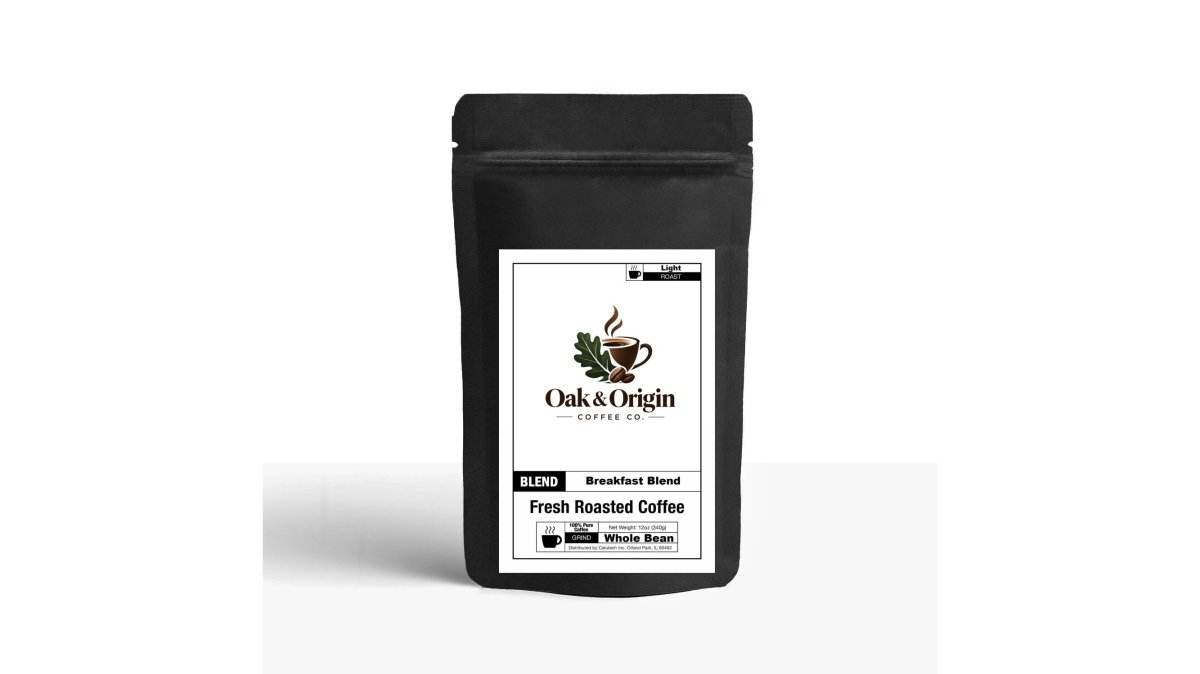
Breakfast Blend is our top pick for most home offices because it balances gentle brightness with a soft, easy finish. The cup opens with walnut richness, mild apple, and a quiet raisin note, rounded out by toffee sweetness. It holds up in a drip machine, a French press, or an espresso machine without turning bitter. For a first cup that never demands attention, this is the one. Shop the Breakfast Blend.
Best for: anyone who wants a reliable, smooth morning cup. Skip if: you crave a heavy, smoky dark roast.
2. Gourmet Donut Shop: The Best-Rated Everyday Crowd-Pleaser
Gourmet Donut Shop has cocoa, caramel, and toffee notes, with a mild fruit finish. Order the Gourmet Donut Shop blend.

3. 6 Bean Blend: The Best Bold Option for Long Workdays
Long workdays call for a cup with backbone. 6 Bean Blend layers berry and jasmine top notes over caramel, cocoa, and dark chocolate, finishing smooth with a hint of smoke. It pulls a rich, golden crema in an espresso machine, which makes it the strongest choice for milk drinks and afternoon espresso shots. Buy the 6 Bean Blend.

4. Peru: The Best Single-Origin Pick for Slow Sipping
Peru is a medium roast built for drinkers who want clarity, not intensity. Salted caramel and silky sweetness sit under a gentle citrus lift, giving the cup a clean, rounded finish. It rewards a slower brew method, so reach for it on quieter mornings when a pour-over is part of the ritual. Shop the Peru single origin.
5. Nightfall Decaf and Mushroom Ritual Blend: The Best Budget-Friendly Wind-Down Options
Nightfall Decaf has chocolate and toasted almond notes with low acidity. The Mushroom Ritual Blend, at $20.00, includes Lion's Mane, Cordyceps, and Reishi and is prepared by adding hot water and stirring. Order Nightfall Decaf.
| Pick | Roast | Flavor Profile | Best For | Price |
|---|---|---|---|---|
| Breakfast Blend | Light | Walnut, apple, toffee | Steady morning start | $24.99 |
| Gourmet Donut Shop | Light-Medium | Cocoa, caramel, toffee | Everyday crowd-pleaser | $24.99 |
| 6 Bean Blend | Dark | Berry, cocoa, dark chocolate | Long workdays | $24.99 |
| Peru | Medium | Salted caramel, citrus | Slow sipping | $24.99 |
| Nightfall Decaf | Medium-Dark | Chocolate, toasted almond | Evening wind-down | $24.99 |
| Mushroom Ritual Blend | Medium | Earth-sweet, smooth | Functional reset | $20.00 |
The Best Coffee Beans for Drip Coffee Makers and Batch Brewing
The best coffee beans for drip coffee are medium and light-medium roasts with balanced acidity, because batch brewers mute delicate top notes and exaggerate roast defects. Gourmet Donut Shop and Breakfast Blend both hold their sweetness across a full pot, while 6 Bean Blend works if you want a bolder cup that still survives milk.
Match the Bean to the Brewer You Actually Own
Home-office drip setups fall into three rough camps, and each rewards a different bean choice:
- Standard 12-cup batch brewer: Go with Breakfast Blend or Gourmet Donut Shop. These roasts stay sweet and rounded when a pot sits on a warming plate for 20 to 30 minutes, which is the realistic life of a workday pot.
- SCA-certified or precision batch brewer: These machines hit a consistent 195-205°F brew temperature and a full saturation bloom, so they pull more clarity out of a light roast. Breakfast Blend's apple and toffee notes separate cleanly here instead of blurring together.
- Single-serve pod or K-cup adapter: Use the same whole beans, but grind slightly finer and dose to the pod's rated capacity. Pre-ground pods stale fastest, so whole beans you grind per cup are the bigger upgrade.
Grind, Ratio, and Timing That Actually Work
For a standard drip brewer, start with a medium grind, roughly the texture of table salt, and a ratio of about 1 tablespoon of ground coffee per 6 ounces of water. That puts a 12-ounce bag at roughly 24 to 30 cups at standard strength, which is the number to use when you compare price per cup rather than price per bag. If the pot tastes weak or sour, tighten the grind one notch; if it tastes bitter or muddy, loosen it. Drink within 30 minutes of brewing, because a warming plate keeps cooking the coffee and pushes it toward flat and bitter.
Freshness and Storage for a Workday Pot
Check the roast date, not just the best-by date. Most practitioners find whole beans peak roughly 5 to 20 days after roast for drip brewing, then fade gradually. Buy in smaller bags you will finish within two to three weeks, keep whole beans in an airtight container away from light and heat, and grind just before brewing. Pre-ground coffee stales fast because more surface area is exposed to oxygen, so a burr grinder is the single best upgrade for batch brewing.
What a Pot Costs Per Cup
At $24.99 for a 12-ounce bag, a 12-cup pot using about 1.5 ounces of coffee costs roughly $3.10 in beans for the whole pot, well under a dollar per cup at standard strength. That is the comparison that matters against a $4 to $6 café drink, and it is why freshness and grind control beat bulk buying on value.
The Best Coffee Beans for Pour-Over and Single-Cup Brewing
The best coffee beans for pour-over are single origins with clear flavor separation, and Peru fits that brief. A medium grind and a slow, steady pour let the citrus and caramel notes come through without muddiness. For single-cup machines, keep the same whole beans and grind slightly finer. Freshness matters most here: check the roast date, buy in smaller bags, and skip beans with no date on the label.
Dial In Grind Size and Ratio by Method
Pour-over and single-cup brewing reward a little precision. Use these starting points, then adjust one variable at a time:
- Pour-over (cone dripper): Medium-fine grind, about the texture of sea salt, with a ratio near 1:16 coffee to water. A 20-gram dose to 320 grams of water is a reliable starting cup. If the drawdown stalls, coarsen the grind; if it drains fast and tastes thin, tighten it.
- French press: Coarse grind, roughly the texture of breadcrumbs, with a 1:15 ratio and a 4-minute steep. Peru's silky sweetness holds up well here.
- Single-serve brewer: Fine grind sized to the pod or basket, dosed to the machine's rated capacity. Whole beans ground per cup beat pre-ground pods on freshness every time.
Single-Serve Compatibility and Convenience
If your home office runs on a single-serve machine, the bean still matters more than the pod. Choose a medium or medium-dark roast that extracts fully in a short brew cycle, 6 Bean Blend and Nightfall Decaf both do, and avoid very light roasts that taste sour when the machine's contact time is short. Keep a small airtight container of whole beans next to the machine and grind per cup so the last cup of the day tastes like the first.
Low-Acid, Decaf, and Afternoon Energy
Not every workday cup should be caffeinated. Nightfall Decaf delivers chocolate and toasted almond notes with low acidity, which suits drinkers who want an evening cup or who are sensitive to acid. A common misconception is that darker roasts carry more caffeine; in practice, caffeine is set mostly by the bean and the dose, and a longer roast can actually reduce it slightly. If afternoons drag, a smaller dose of a medium roast often works better than a bigger mug of dark roast, and a decaf or the Mushroom Ritual Blend is a reasonable way to keep the ritual without pushing caffeine past your cutoff.
Cost Per Cup for Slow Brewing
Pour-over uses less coffee per serving than a full batch pot. At roughly 20 grams per cup and $24.99 per 12-ounce bag, a pour-over cup lands near $0.60 to $0.75 in beans, the lowest cost per cup in this lineup and a strong argument for keeping a single origin on the shelf for quieter mornings. For more on storage and brewing standards, see guidance from the Specialty Coffee Association.
Frequently Asked Questions
What are the best coffee beans for a home office?
Oak & Origin's Breakfast Blend at $24.99 has walnut, mild apple, raisin, and toffee notes. Gourmet Donut Shop has cocoa, caramel, and toffee notes, with mild fruit. The 6 Bean Blend has berry and dark chocolate notes.
Are whole beans better than pre-ground coffee for working from home?
Whole beans stay fresh far longer because the oils and aromatics are sealed inside until you grind. Pre-ground coffee stales within days of opening, which matters when you brew several cups a day at home. A $20 to $40 burr grinder pays for itself quickly, and grinding right before brewing gives you noticeably more aroma and clarity. If you use a drip machine on a timer, grind the night before and store the grounds airtight.
How should I store coffee beans to keep them fresh?
Keep beans in an opaque, airtight container at room temperature, away from the stove, windows, and fridge. Moisture and temperature swings are the enemies, so skip the freezer unless you are storing a sealed bag for more than a month. Buy in amounts you will finish within two to three weeks, and check the roast date rather than a best-by date. A 12-ounce bag brewed at two cups a day lasts roughly two weeks.
Which coffee roast is best for drinking throughout the workday?
Peru is a medium roast with salted caramel and citrus notes. French Roast is a deep dark roast with bittersweet cocoa, dark caramel, and smoky sweetness. Nightfall Decaf is a medium-dark roast with chocolate and toasted almond notes and low acidity.
Your home office deserves a cup that actually supports the work. Oak & Origin Coffee Co. roasts small batches to order, sources ethically, and ships whole beans at peak flavor, so every bag lands fresh. Start with the Breakfast Blend for steady mornings, or build a two-bag rotation with 6 Bean Blend for the afternoon push. Get started with Oak & Origin Coffee Co. and turn your morning brew into a ritual that grounds your day.
